Cisco Hybrid Worker Bundle
Part 2: Evolving the Experience
Overview
Hybrid Worker Bundle V2 established a cohesive, human-centered experience for employees receiving new technology. But as the program scaled, feedback from employees and operational teams revealed opportunities to make that experience lighter, simpler, more sustainable, and easier to navigate.
The opportunity wasn't to reinvent the experience, but to evolve it with purpose—preserving what worked while addressing friction across packaging, setup, communications, and the overall employee journey.
Designing From Feedback
V3 began by looking closely at feedback from the people experiencing and supporting the bundle.
Research identified opportunities to reduce packaging size and weight, make the package easier to open and move, simplify disposal, and better support employees across different work environments and physical abilities.
Those findings became design requirements rather than isolated fixes, giving the team a framework for evaluating the experience as a whole.
Rethinking the Package
The most visible change was a fundamentally different packaging architecture.
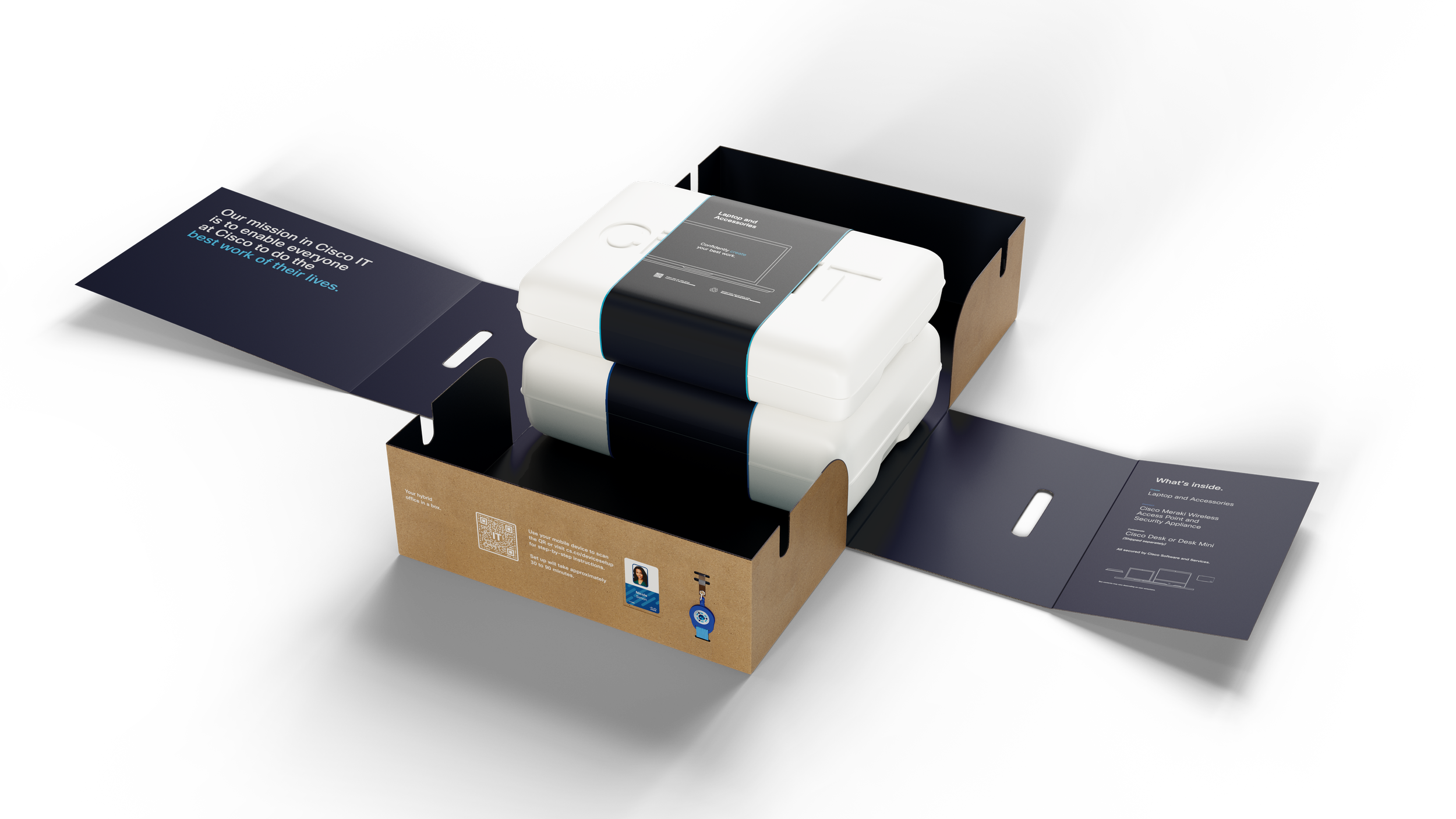
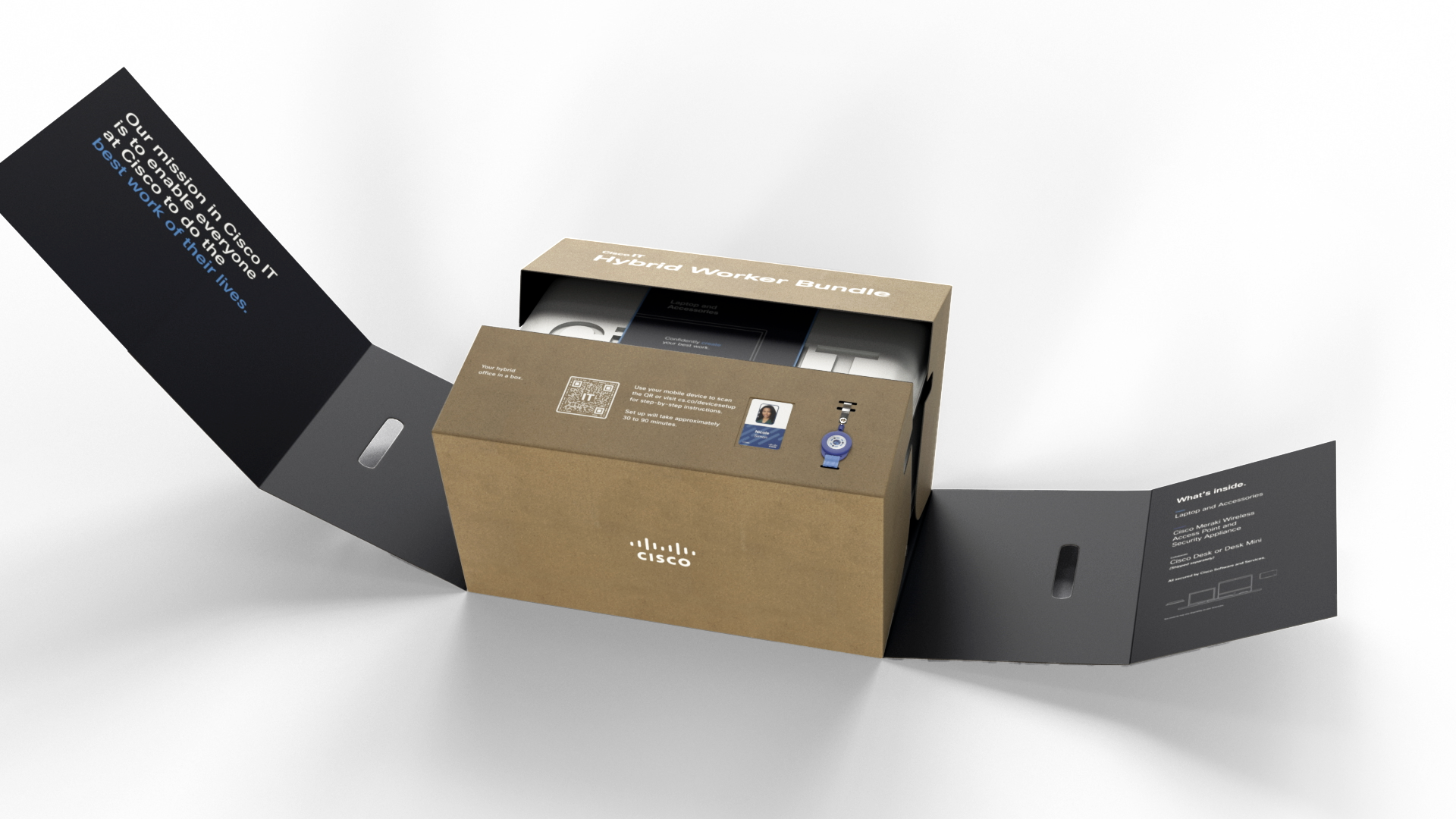
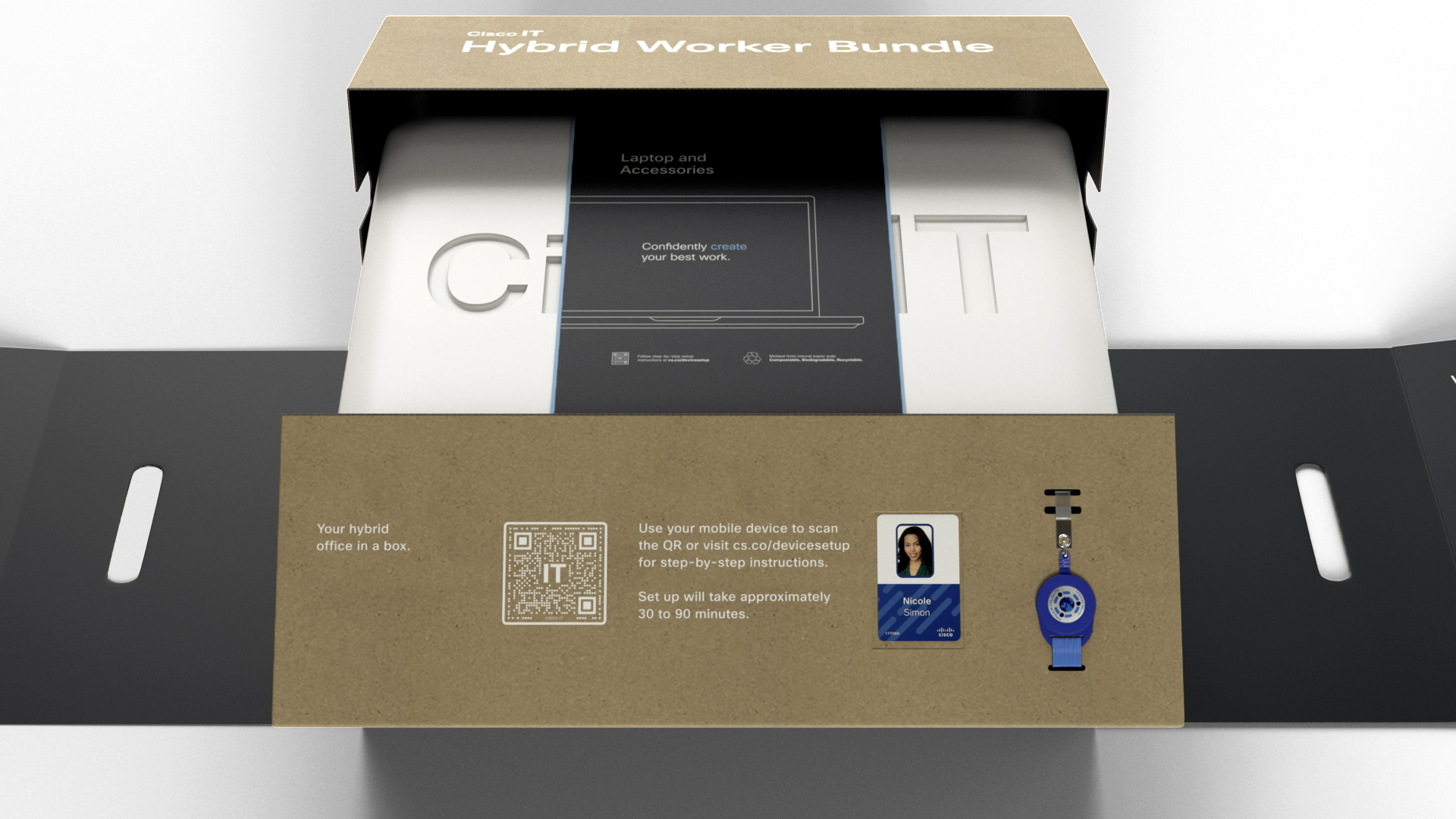
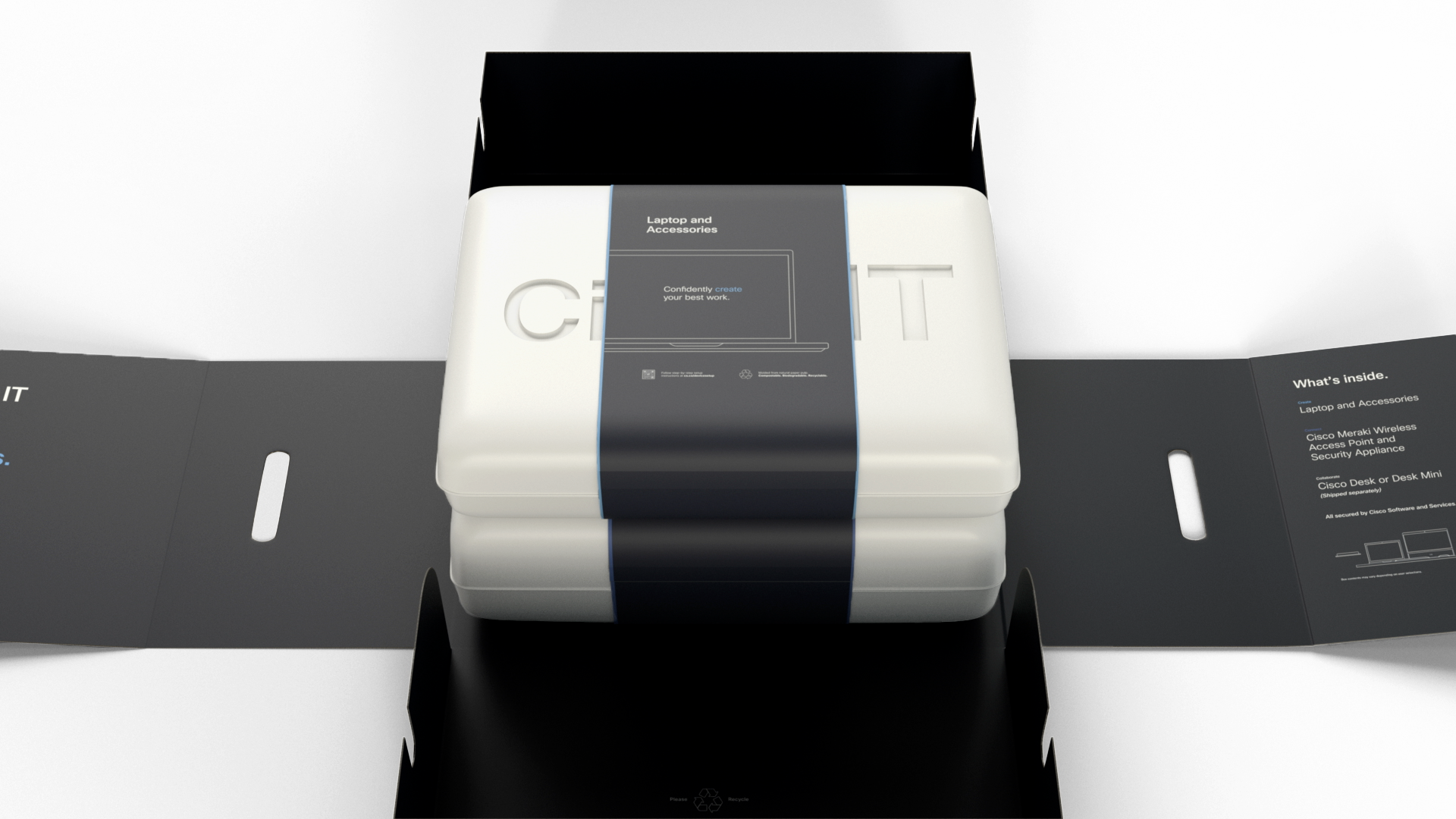
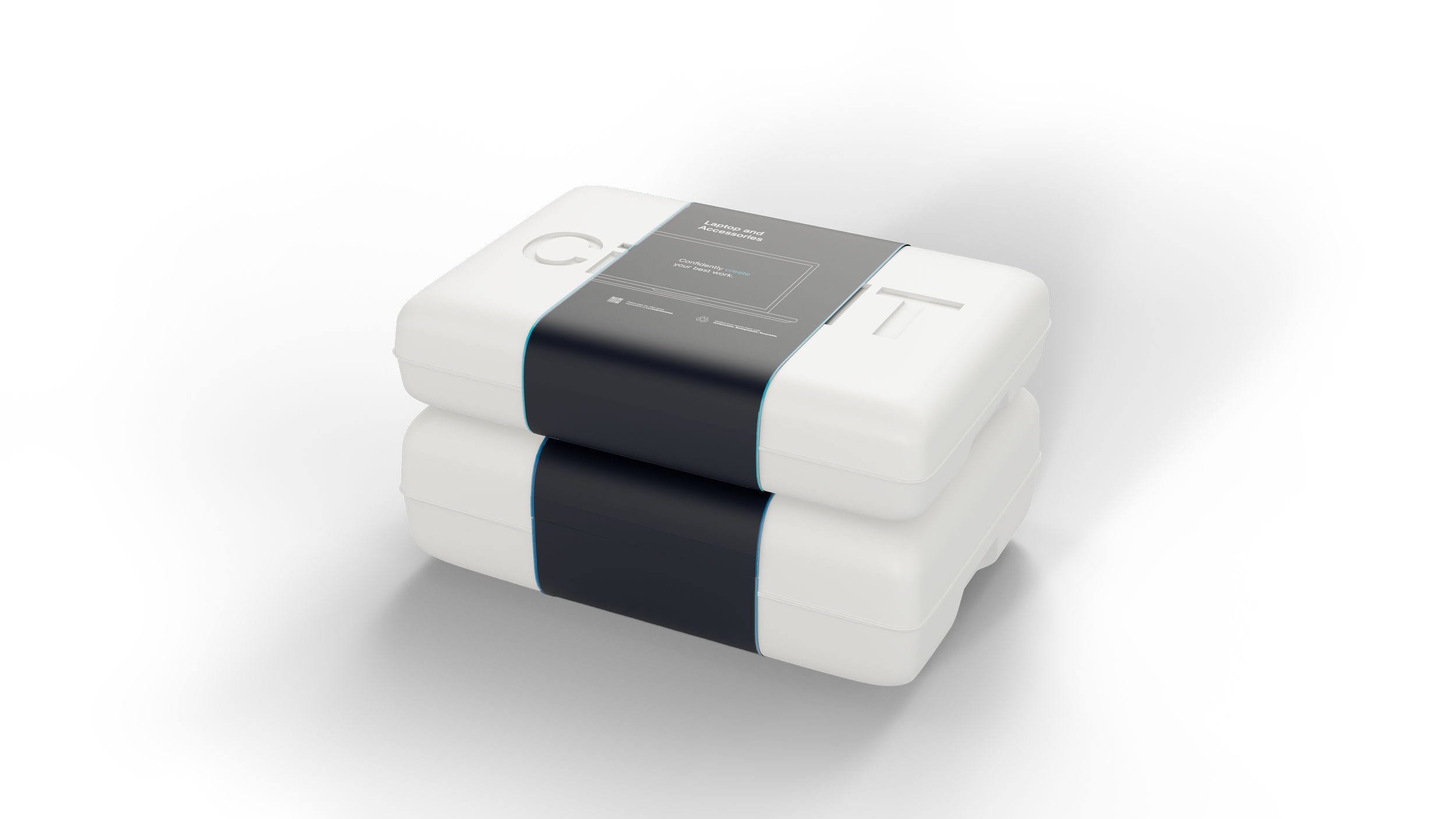
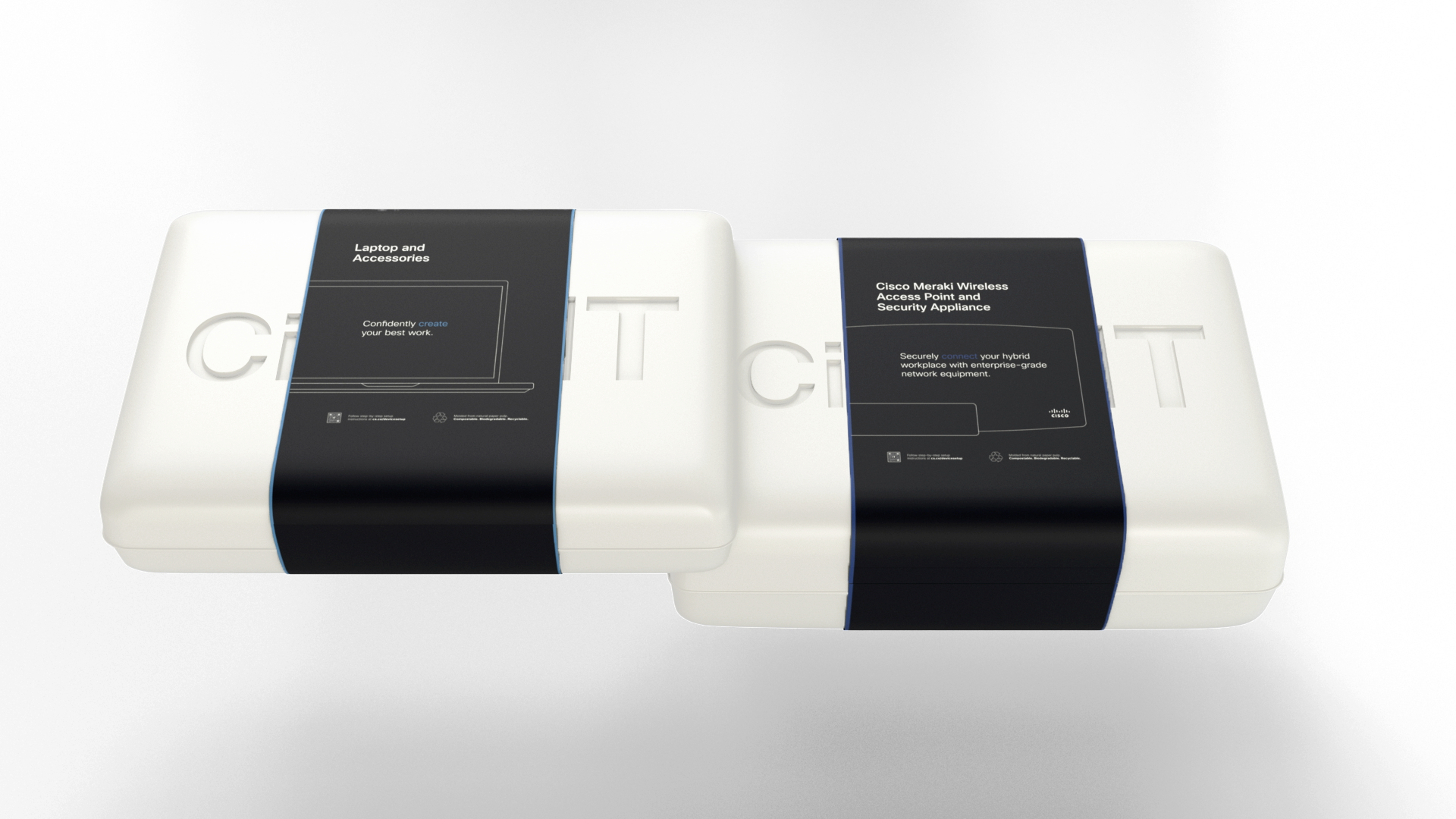
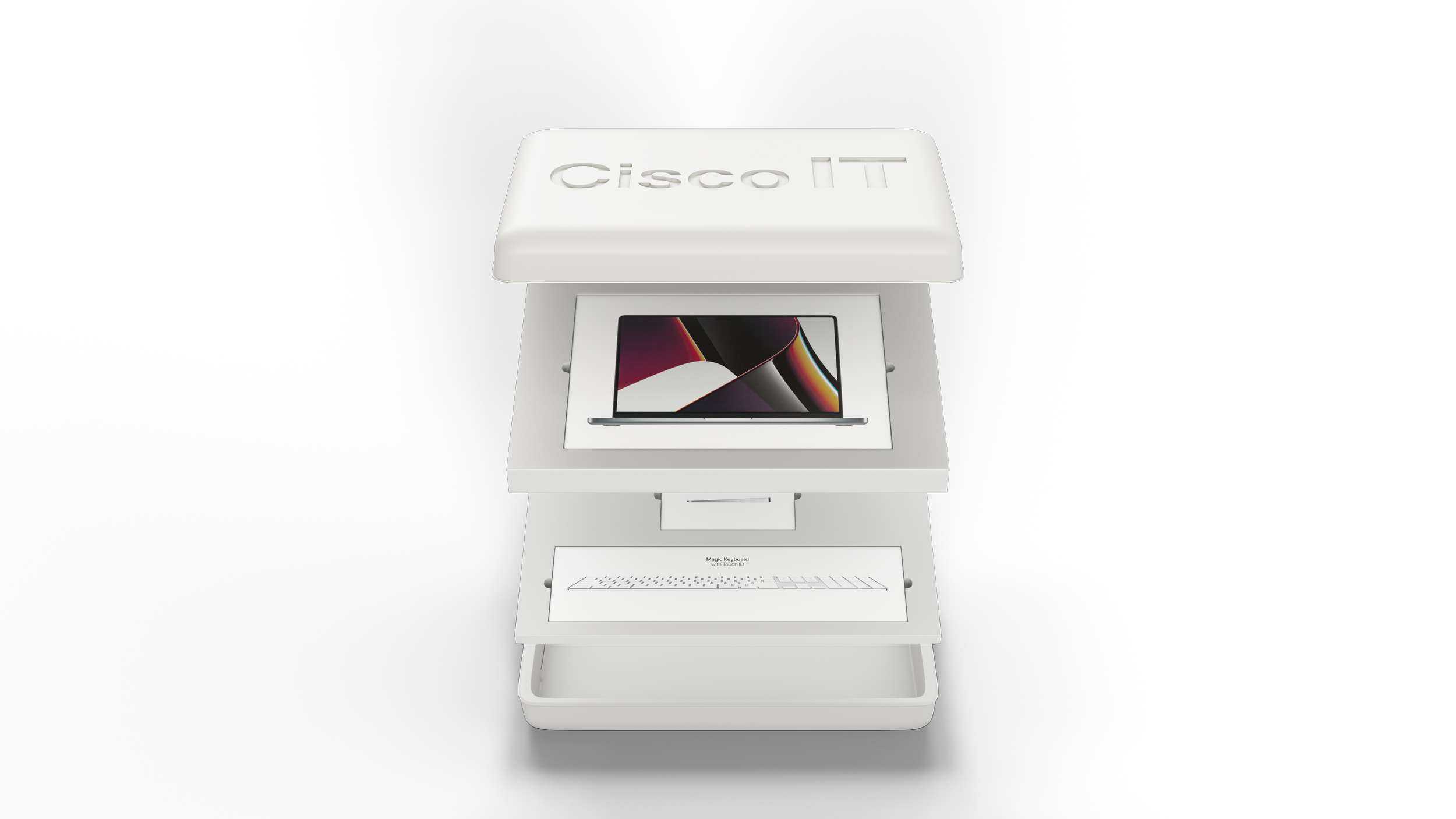
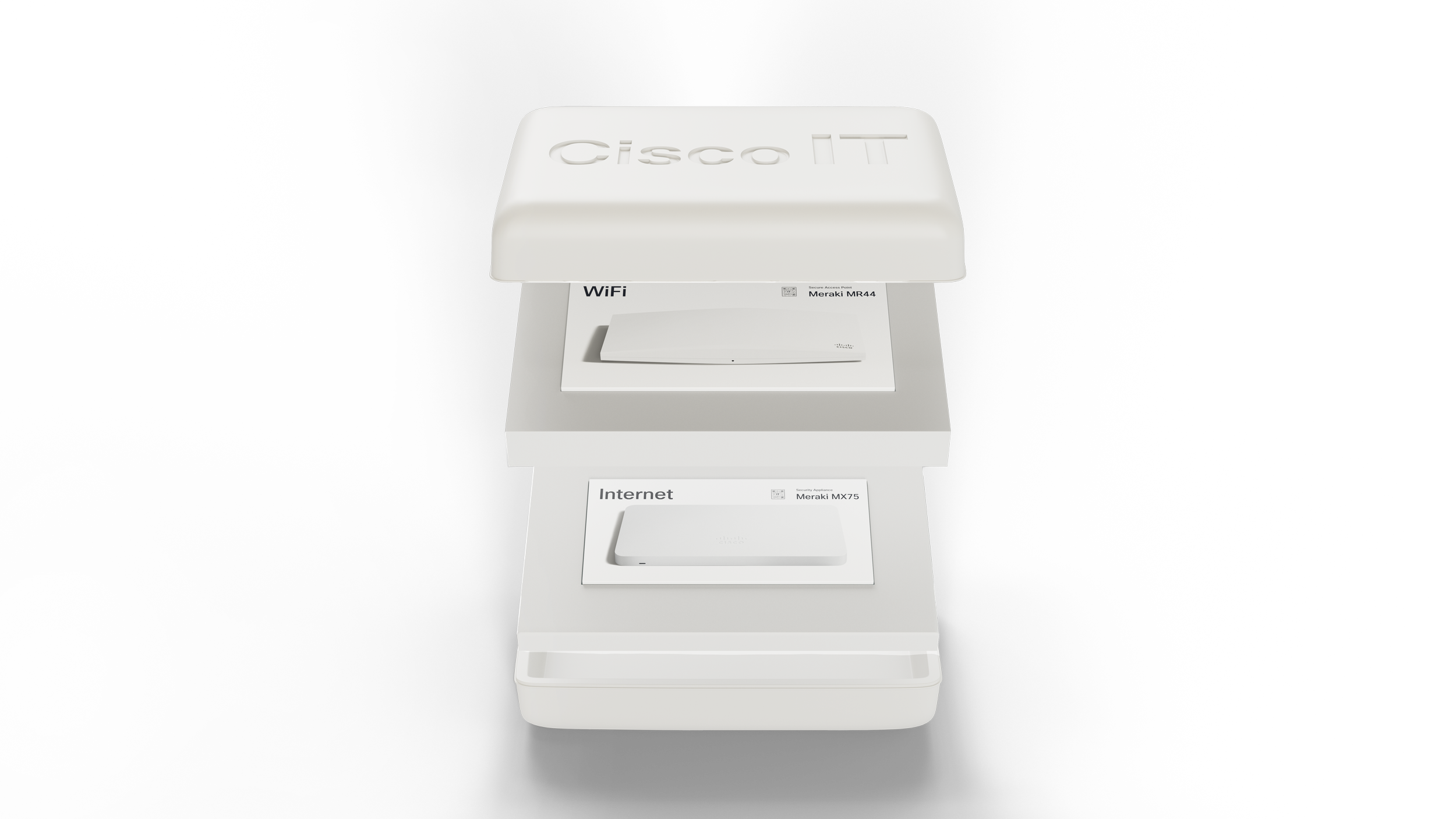
The layered V2 experience was replaced by a more efficient all-in-one shipper using molded paper-pulp capsules to protect and organize the equipment. The new structure reduced unnecessary material while creating a package that was easier to handle, open, and dispose of.
The result was a package that was 41% lighter, decreasing from 22 pounds to 13 pounds; used 31% less corrugated material; and was 12% smaller overall.
The paper-pulp capsules were recyclable, compostable, and biodegradable, while the shipper and belly bands could also be recycled.
Simplifying Without Losing the System
Reducing the amount of packaging also meant reconsidering how the established visual system worked across the V3 experience.
Rather than reproducing the more elaborate illustrated surfaces of V2, V3 used color, typography, illustration, and concise messaging more selectively. Color-coded belly bands maintained the distinction between bundle types, while the illustration system continued across digital communications—from ordering and confirmation through shipping, delivery, and setup.
The result was a simpler expression of the same cohesive experience: fewer materials and visual elements, without losing the continuity employees encountered across physical and digital touchpoints.
Prototyping the Experience
Packaging decisions were evaluated through physical prototypes rather than as graphics alone.
Working across disciplines, we examined how employees would encounter the package, access their equipment, understand what to do next, and remove and dispose of the materials. Prototyping allowed design decisions to be evaluated in the context of the complete physical interaction rather than as isolated components.
The Result
V3 evolved the Hybrid Worker Bundle into a lighter, more accessible, and more sustainable experience without abandoning the visual and experiential foundation established in V2.
Rather than treating packaging, digital communications, setup, and support as separate deliverables, the work continued to approach them as parts of a single employee journey—using design to make a complex operational program feel simpler and more intentional.
My Role
Visual Design & Art Direction · Experience Design · Packaging Graphics · Illustration · Design Systems · Cross-Functional Collaboration