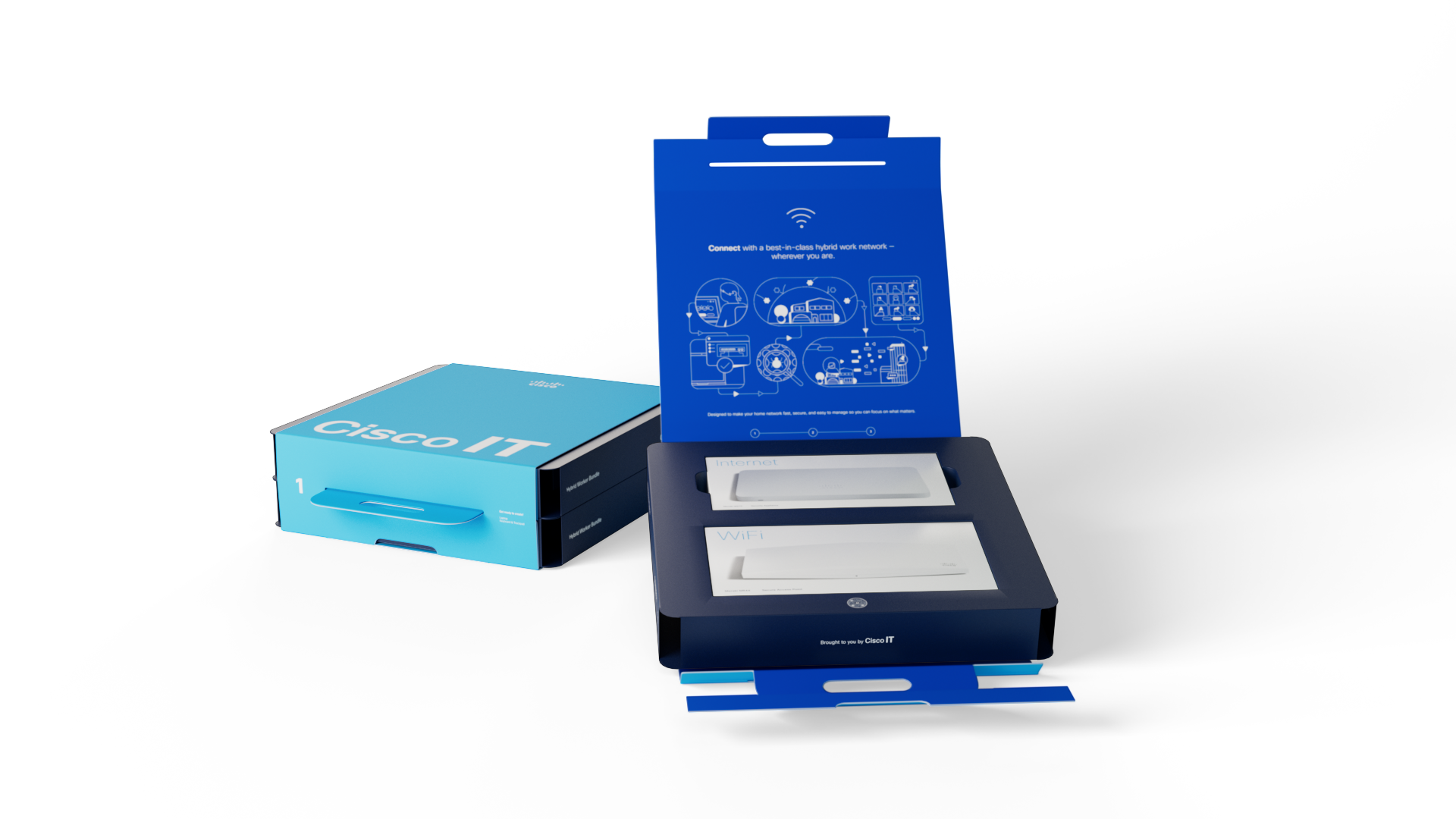
Cisco Hybrid Worker Bundle — Part 1
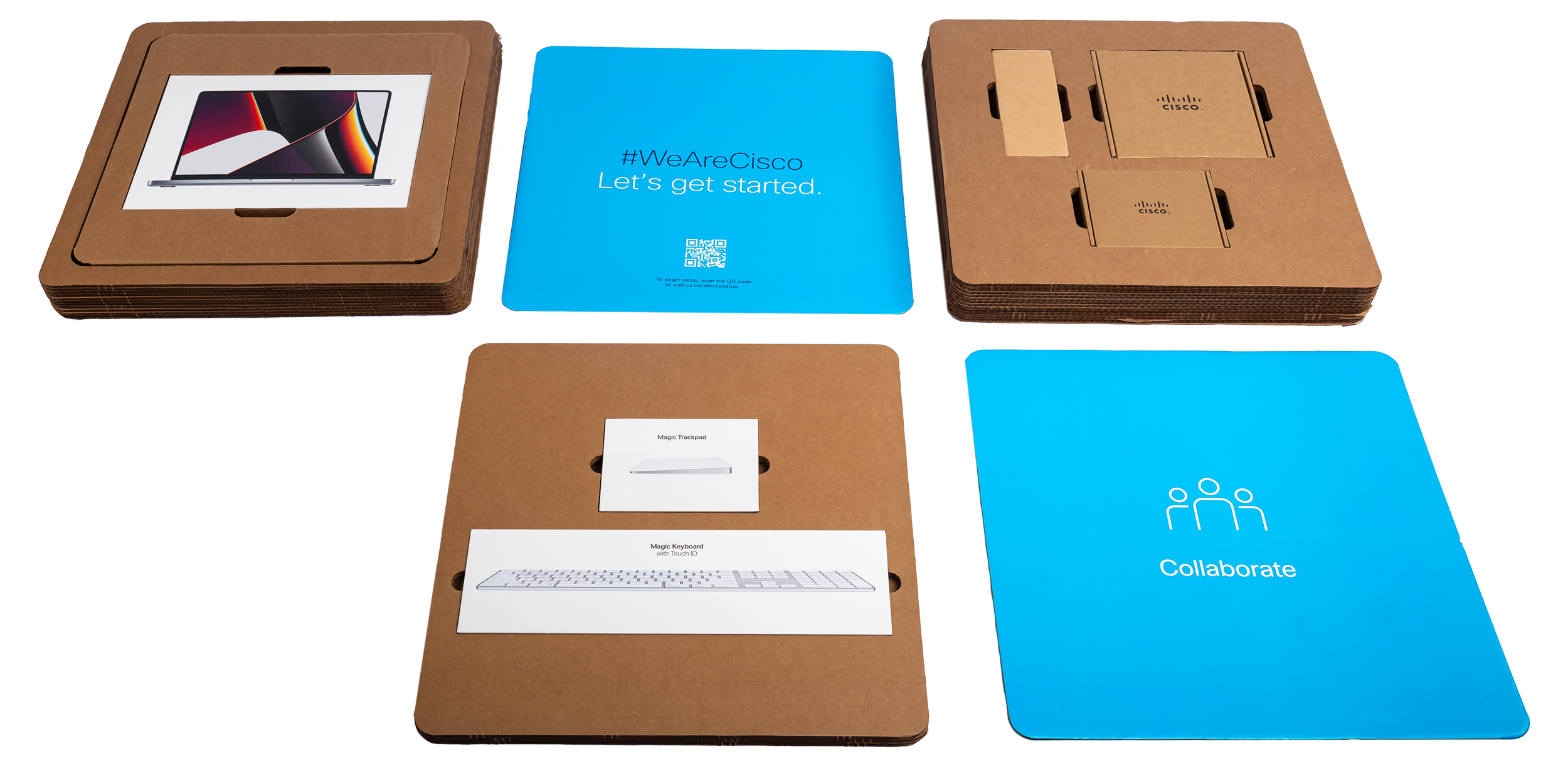
The original Cisco Hybrid Worker Bundle (2023)
Designing the Experience
Overview
The Cisco Hybrid Worker Bundle brought together the technology employees needed to work effectively from home or in a hybrid environment. Depending on their needs, employees received a laptop and accessories, Cisco Meraki networking equipment, and Webex collaboration technology—all delivered as a coordinated experience.
I joined the project as the initial bundle was preparing to go into production, contributing visual design and brand direction to the experience. That first release established the foundation. The next iteration gave our multidisciplinary team the opportunity to step back and rethink the experience as a whole.
The Challenge
The Hybrid Worker Bundle wasn't simply a packaging project. The employee experience extended across multiple physical and digital touchpoints, from email communications to ordering and setup experiences and the package itself.
Those touchpoints were developed across different teams and systems, each with its own requirements. Some elements were within our direct control, while others, including individual technologies and manufacturer packaging, were not. This resulted in a fragmented experience for the end user.
The challenge was to create greater continuity across those interactions while allowing each part of the experience to do what it needed to do.
How could we make a complex technology experience feel cohesive, approachable, and distinctly Cisco from beginning to end?
Designing Around the Employee
Rather than beginning with individual deliverables, the team zoomed out.
We worked across visual design, product research, content, program management, industrial design, and other disciplines to establish a shared vision for the experience. Together, we mapped the employee journey across seven stages: Discover, Request, Anticipate, Unbox, Setup, Tidy, and Use.
We didn't design that journey strictly from beginning to end. We built it from the middle outward, using the physical unboxing experience as an anchor and considering what employees needed before and after that moment.
That journey became a framework for evaluating everything from ordering and communications to packaging, setup, support, and recycling.
Building Alignment as the Experience Evolved
The experience developed through ongoing collaboration, review, and iteration.
I worked with design partners, content leads, technical teams, researchers, program managers, and other contributors to understand how decisions within individual workstreams affected the larger experience.
Recurring executive reviews were another important part of that process. Working with the design lead and project partners, I helped determine what leadership needed to understand, what feedback or decisions were needed, and how work across multiple disciplines could be translated into clear visual narratives.
Those conversations helped maintain alignment as concepts evolved, decisions were made, and some ideas moved forward while others were left behind.
Create. Connect. Collaborate.
Three categories provided an organizing structure for the experience: Create, Connect, and Collaborate.
Create represented the employee's computer and accessories. Connect covered Cisco Meraki networking equipment. Collaborate represented Cisco Webex technology.
Each category used a distinct combination of color, iconography, messaging, and illustration within the larger visual system. More importantly, that structure repeated across touchpoints—from ordering and communications to packaging and setup—giving employees familiar visual cues as they moved through the experience.
Rather than simply identifying pieces of hardware, Create, Connect, and Collaborate became a wayfinding system for the journey.
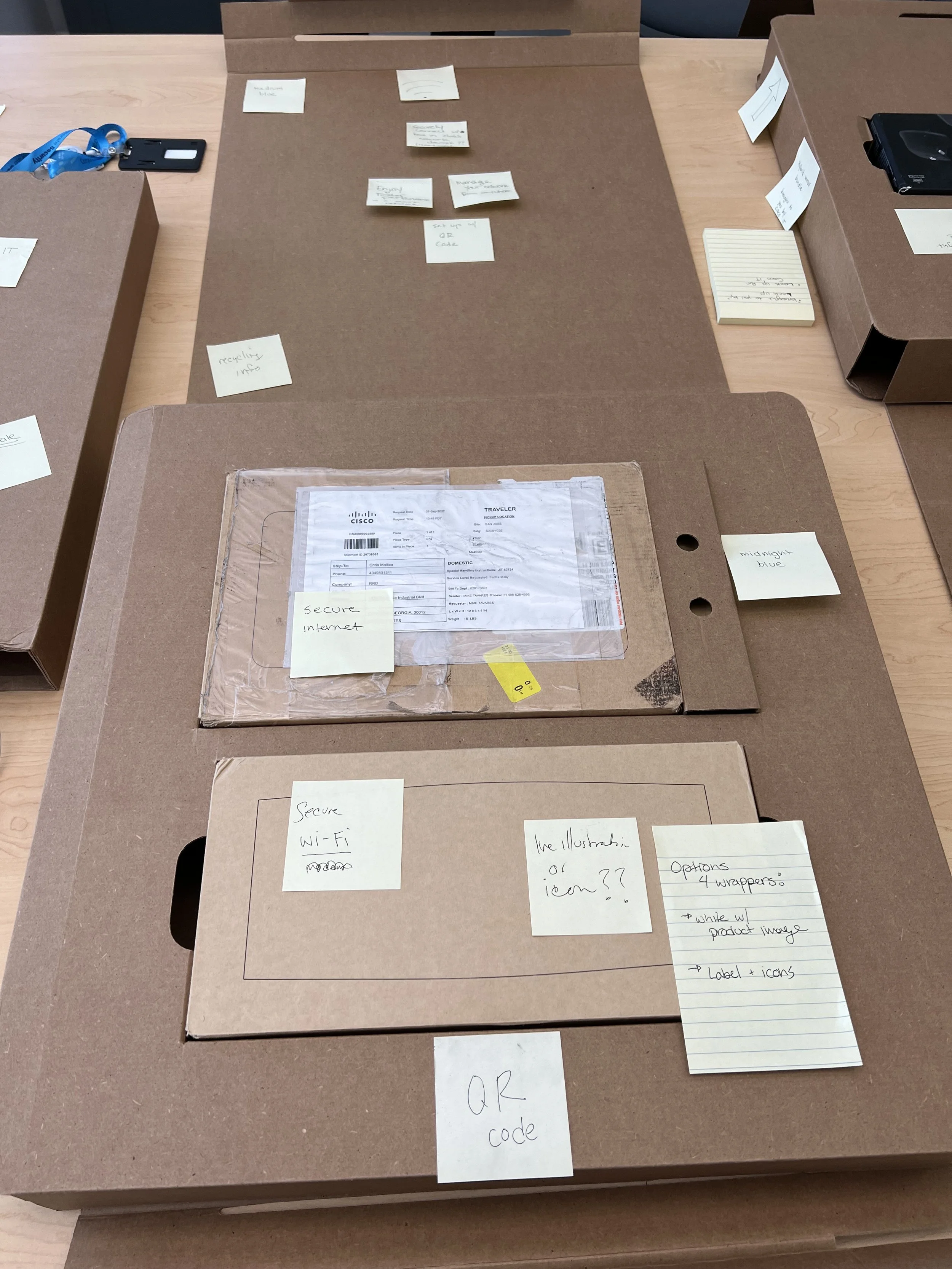
Mapping content on the box packaging.
Designing the Unboxing Experience
The physical package became one of the most concentrated expressions of the experience.
Working alongside industrial design and other partners, I developed the visual system alongside the physical packaging rather than applying graphics after the structure had been engineered.
Full-scale cardboard prototypes helped us map the opening sequence and determine where color, messaging, illustrations, QR codes, setup information, and other content belonged.
The redesigned package used single-piece folded-cardboard trays and sleeves in place of the heavier internal corrugated construction used in the initial release. Tear-away openings reduced the need for packing tape, and the structure was designed with recyclability and ease of use in mind.
Opening the package revealed a personalized employee badge with activation information, creating an immediate welcome moment. Beneath it, numbered Create and Connect layers guided employees through the contents in sequence.
Rich color, illustration, selective UV details, and subtle debossing gave the package a premium tactile quality while keeping the visual design connected to the larger employee journey.
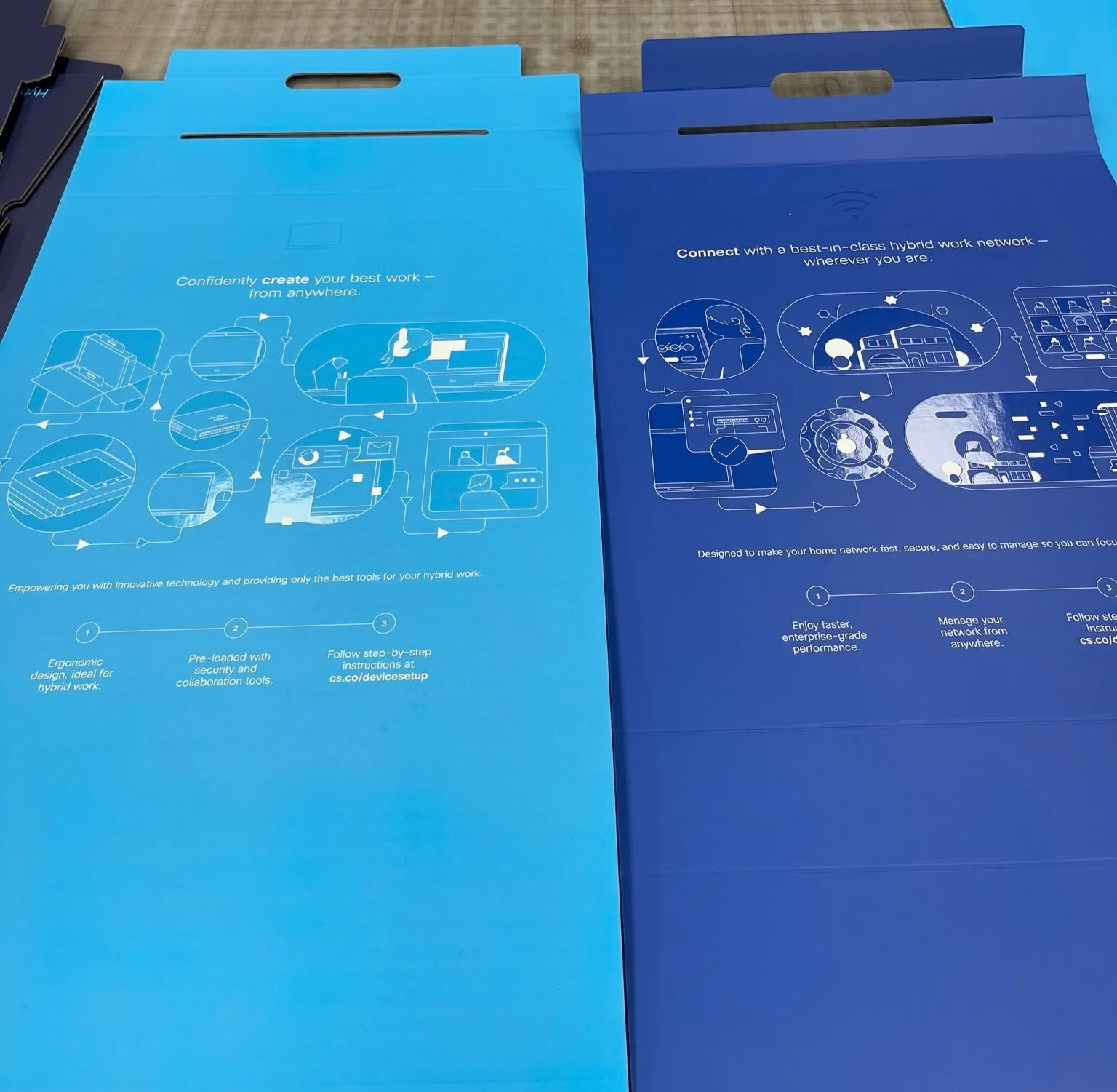
A Visual Language Built to Travel
Illustration became a major component of the experience, helping make technology and processes feel more approachable and recognizable.
The visual language was flexible enough to adapt across packaging, communications, digital experiences, and other applications while remaining part of the same visual world. That flexibility allowed the experience to remain recognizable even as the format and context changed.
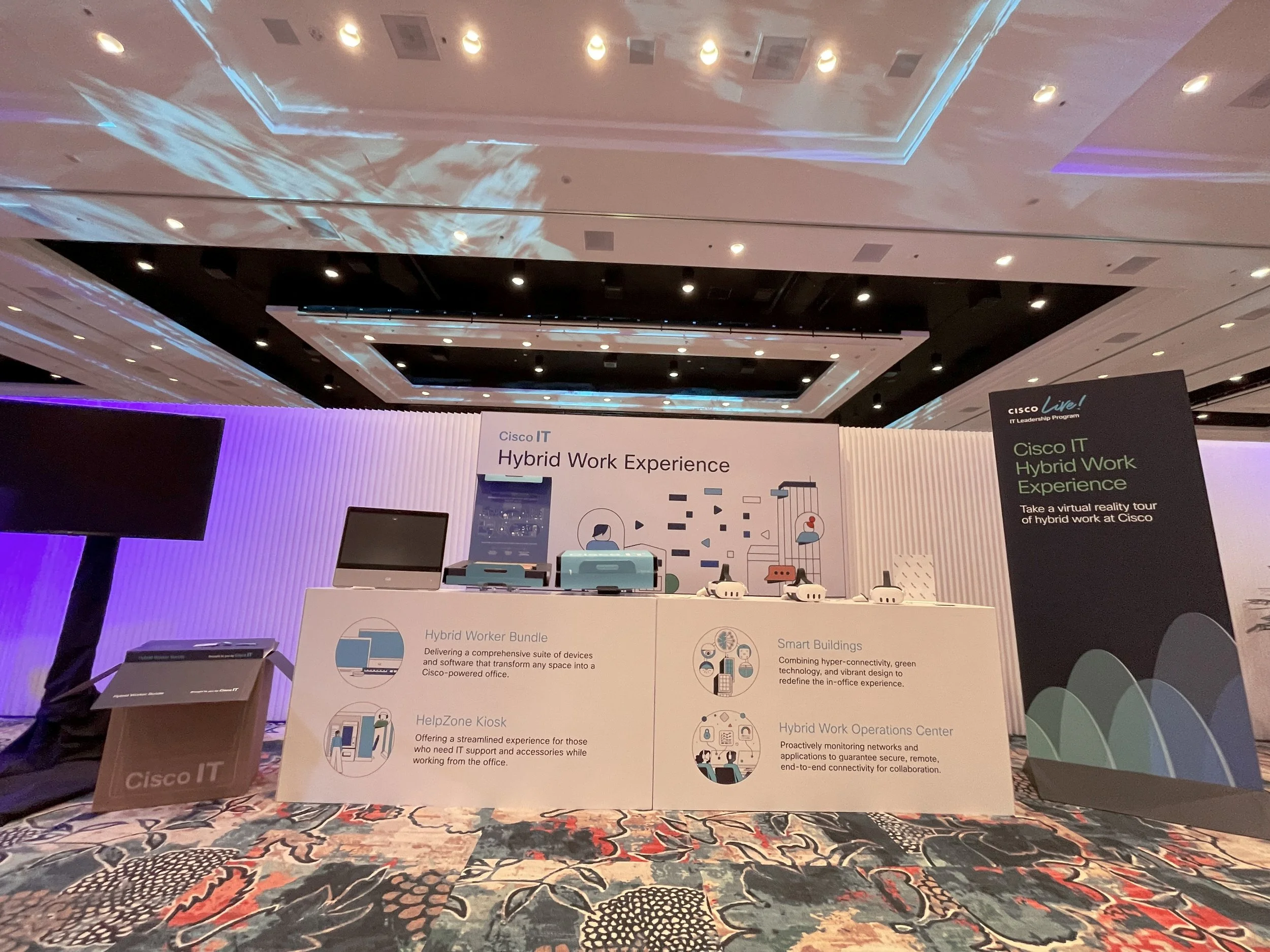
Extending the Experience to Cisco Live
The visual system eventually moved beyond the bundle itself.
For Cisco Live, I designed the Hybrid Work Experiences environment, which featured the Hybrid Worker Bundle alongside Smart Buildings, HelpZone Kiosk, and the Hybrid Work Operations Center.
Working with content designers and other partners, I extended the visual language into the booth environment and supporting materials, including a fact sheet and sticker giveaway. I also provided production-ready graphics, brand specifications, and visual guidance for a related VR experience developed with a specialized vendor.
The event demonstrated that the system could extend beyond the original physical and digital experience while remaining recognizable at a very different scale.
The Result
The redesigned Hybrid Worker Bundle turned a collection of related touchpoints into a more deliberate, connected employee experience.
In post-setup research, 75% of respondents reported being satisfied or very satisfied with the Hybrid Worker Bundle experience—40% very satisfied and 35% satisfied.
75% — Satisfied or very satisfied
But the research also revealed where the experience could improve. Employees surfaced friction around package weight and maneuverability, material volume and recycling, information hierarchy, hardware needs, setup, and other moments across the journey.
Those findings didn't mark the end of the design process. They became the inputs for what came next.
Continue to Part 2: Evolving the Experience →
My Role
Visual Design · Art Direction · Packaging Graphics · Visual Systems · Illustration · Executive Storytelling · Digital Experience · Environmental Graphics